 100% FREE ACCESS
12th Standard Syllabus & Materials
12th Standard
TN 12th Computer Applications மின்னணு தரவு பரிமாற்றம் Sample Question Papers Study Material - QB365 Set A
NEW12th Standard
TN 12th Computer Applications மின் - வணிக பாதுகாப்பு அமைப்புகள் Sample Question Papers Study Material - QB365 Set A
NEW12th Standard
TN 12th Computer Applications மின்னணு செலுத்தல் முறைகள் Sample Question Papers Study Material - QB365 Set A
NEW12th Standard
TN 12th Computer Applications மின் - வணிகம் Sample Question Papers Study Material - QB365 Set A
NEW12th Standard
TN 12th Computer Applications திறந்த மூல கருத்துருக்கள் Sample Question Papers Study Material - QB365 Set A
NEW12th Standard
TN 12th Computer Applications வலையமைப்பு வடமிடல் Sample Question Papers Study Material - QB365 Set A

Published on: 20/10/2025
Download Tamil Nadu 12th Standard Chemistry question papers, model tests, one-mark questions, important questions, and public exam papers in PDF format. Free study materials and answer keys for TN State Board students.
Questions + Answers key
Take MCQ Chemistry Test
1.
Isoprophylbenzene on air oxidation in the presence of dilute acid gives ______.
C6H5COOH
C6H5COCH3
C6H5COC6H5
C6H5- OH
2.
On reacting with neutral ferric chloride, phenol gives ______.
red colour
violet colour
dark green colour
no colouration.
3.
Among the following ethers which one will produce methyl alcohol on treatment with hot HI?
(H3C)3C-O-CH3
(CH3-)2-CH-CH2-O-CH3
CH3-(CH2)3-O-CH3
CH3-CH2-\(\underset { \overset { | }{ { CH }_{ 3 } } }{ CH } \)-O-CH3
4.
One mole of an organic compound (A) with the formula C3H8O reacts completely with two moles of HI to form X and Y. When Y is boiled with aqueous alkali it forms Z. Z answers the iodoform test. The compound (A) is ______.
propan – 2-ol
propan -1-ol
ethoxy ethane
methoxy ehane
5.
Which of the following compound can be used as antifreeze in automobile rediators?
methanol
ethanol
Neopentyl alcohol
ethan -1, 2-diol
6.
HO CH2 CH2 – OH on heating with periodic acid gives ______.
methanoic acid
Glyoxal
methanol
CO2
7.
In the reaction Ethanol \(\overset { { PCl }_{ 5 } }{ \longrightarrow } X\overset { alc.KOH }{ \longrightarrow } Y\overset { { H }_{ 2 }{ SO }_{ 4 }/{ H }_{ 2 }O }{ \underset { 298k }{ \longrightarrow } } Z.\) The ‘Z’ is ______.
ethane
ethoxyethane
ethylbisulphite
ethanol
8.
The correct IUPAC name of the compound
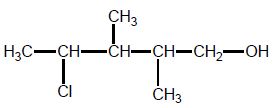
4 – chloro – 2,3 – dimethyl pentan – 1-ol
2,3 – dimethyl – 4- chloropentan -1-ol
2,3,4 – trimethyl – 4- chlorobutan -1-ol
4– chloro – 2,3,4 – trimethyl pentan – 1-ol
9.
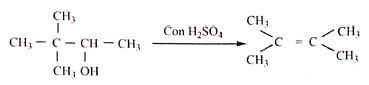
(CH3)3-C-CH(OH) CH3 \(\overset { con{ H }_{ 2 }{ SO }_{ 4 } }{ \longrightarrow } \)X (major product)
(CH3)3 CCH = CH2
(CH3)2C = C (CH3)2
CH2= C(CH3)CH2-CH2- CH3
CH2= C (CH3) - CH2- CH2- CH3
10.
Which one of the following will react with phenol to give salicyladehyde after hydrolysis.
Dichlo methane
trichloroethane
trichloro methane
CO2
11.
Carbolic acid is _____.
Phenol
Picri cacid
benzoic acid
phenylacetic acid
12.
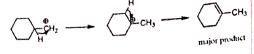
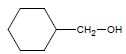 on treatment with Con H2SO4, predominately gives______.
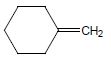
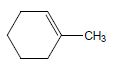
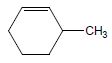
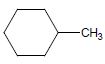
13.
14.
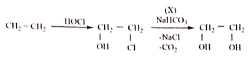
In the reaction sequence, Ethane \(\overset { HOCl }{ \longrightarrow } A\overset { x }{ \longrightarrow } \) ethan -1, 2 - diol. A and X respectively are ________.
Chloroethane and NaOH
ethanol and H2SO4
2 – chloroethan -1-ol and NaHCO3
ethanol and H2O
15.
 The X is _______.
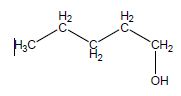
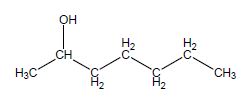
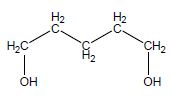
None of these
16.
Which of the following compounds on reaction with methyl magnesium bromide will give tertiary alcohol.
benzaldehyde
propanoic acid
methyl propanoate
acetaldehyde
17.
An alcohol (x) gives blue colour in victormayer’s test and 3.7g of X when treated with metallic sodium liberates 560 mL of hydrogen at 273 K and 1 atm pressure what will be the possible structure of X?
CH3 CH (OH) CH2CH3
CH3 – CH (OH) – CH3
CH3 – C (OH) – (CH3)2
CH3- CH2 –CH (OH) – CH2 – CH3
18.
Dissociation constant of NH4OH is 1.8 x 10⁻⁵ the hydrolysis constant of NH4Cl would be _______.
1.8 × 10⁻¹⁹
5.55 × 10⁻¹⁰
5.55 × 10⁻⁵
1.80 × 10⁻⁵
19.
Which of the following relation is correct for degree of hydrolysis of ammonium acetate?
\(h=\sqrt { \frac { { K }_{ h } }{ C } } \)
\(h=\sqrt { \frac { { K }_{ a } }{ K_b } } \)
\(h=\sqrt { \frac { { K }_{ w } }{ { K }_{ a }.{ K }_{ b } } } \)
\(h=\sqrt { \frac { { { K }_{ a }.{ K }_{ b } } }{ { K }_{ w } } } \)
20.
Which of the following can act as Lowery – Bronsted acid well as base?
HCl
SO42−
HPO42−
Br-
21.
H2PO4- the conjugate base of _______.
PO43−
P2O5
H3PO4
HPO42-
22.
The dissociation constant of a weak acid is 1 × 10⁻³. In order to prepare a buffer solution with a pH = 4, the [Acid]/[Salt] ratio should be _______.
4:3
3:4
10:1
1:10
23.
What is the pH of the resulting solution when equal volumes of 0.1M NaOH and 0.01M HCl are mixed?
2.0
3
7.0
12.65
24.
The solubility of AgCl (s) with solubility product 1.6 × 10⁻¹⁰ in 0.1M NaCl solution would be _______.
1.26 × 10⁻⁵M
1.6 × 10⁻⁹M
1.6 × 10⁻¹¹M
Zero
25.
The percentage of pyridine (C5H5N) that forms pyridinium ion (C5H5NH) in a 0.10M aqueous pyridine solution _______.(Kb for C5H5N = 1.7×10⁻⁹) is
0.006%
0.013%
0.77%
1.6%
26.
Which of these is not likely to act as Lewis base?
BF3
PF3
CO
F–
27.
Which of the following fluro compounds is most likely to behave as a Lewis base?
BF3
PF3
CF4
SiF4
28.
Conjugate base for Bronsted acids H2O and HF are _______.
OH- and H2FH+, respectively
H3O+ and F-, respectively
OH- and F-, respectively
H3O+ and H2F+, respectively
29.
pH of a saturated solution of Ca(OH)2 is 9. The Solubility product (Ksp) of Ca(OH)2 _______.
0.5 × 10⁻¹⁵
0.25 × 10⁻¹⁰
0.125 × 10⁻¹⁵
0.5 × 10⁻¹⁰
30.
Concentration of the Ag+ ions in a saturated solution of Ag2C2O4 is 2.24 ×10⁻⁴mol L-1 solubility product of Ag2C2O4 is_______.
2.42 × 10⁻⁸mol3L-3
2.66 × 10⁻¹²mol3L-3
4.5 × 10⁻¹¹mol3L-3
5.619 × 10⁻¹²mol3L-3
31.
Formula of tris(ethane-1, 2-diamine)iron(II)phosphate _______.
[Fe(CH3-CH(NH2)2)3](PO4)3
[Fe(H2N-CH2-CH2-NH2)3](PO4)
[Fe(H2N-CH2-CH2-NH2)3](PO4)2
[Fe(H2N-CH2-CH2-NH2)3]3(PO4)2
32.
A complex in which the oxidation number of the metal is zero is_______.
K4[Fe(CN)6]
[Fe(CN)3(NH3)3]
[Fe(CO)5]
both (b) and (c)
33.
Which one of the following pairs represents linkage isomers?
[Cu(NH3)4][PtCl4] and [Pt(NH3)4][CuCl4]
[Co(NH3)5(NO3)]SO4 and [Co(NH3)5(ONO)]
[Co(NH3)4(NCS)2]Cl and [Co(NH3)4(SCN)2]Cl
both (b) and (c)
34.
How many geometrical isomers are possible for [Pt(Py)(NH3)(Br)(Cl)]
3
4
0
15
35.
In which of the following coordination entities the magnitude of Δ0 will be maximum?
[Co(CN)6]3-
[Co(C2O4)3]3-
[Co(H2O)6]3+
[Co(NH3)6]3+
36.
Crystal field stabilization energy for high spin d5 octahedral complex is _______.
-0.6\({ \Delta }_{ 0 }\)
0
2(P-\({ \Delta }_{ 0 }\))
2(P+\({ \Delta }_{ 0 }\))
37.
38.
As per IUPAC guidelines, the name of the complex [Co(en)2(ONO)Cl]Cl is _______.
chloro bis ethylenediamine nitrocobalt(III) chloride
chloridobis(ethane-1, 2-diamine)nitro K-O Cobaltate(III) chloride
chloridobis(ethane-1, 2-diammine)nitrito K-O Cobalt(II) chloride
chloridobis(ethane-1, 2-diamine)nitrito K-O Cobalt(III) chloride
39.
An excess of silver nitrate is added to 100ml of a 0.01M solution of Pentaaquachlorochromium (III)chloride. The number of moles of AgCl precipitated would be _______.
0.02
0.002
0.01
0.2
40.
The sum of primary valence and secondary valence of the metal M in the complex [M(en)2(Ox)]Cl is________.
3
6
-3
9
41.
The stability of +1 oxidation state increases in the sequence ________.
Al < Ga < In < Tl
Tl < In < Ga < Al
In < Tl < Ga < Al
Ga< In < Al < Tl
42.
The compound that is used in nuclear reactors as protective shields and control rods is _________.
Metal borides
metal oxides
Metal carbonates
metal carbide
43.
| Column-I | Column-II | ||
| A | Borazole | 1 | B(OH)3 |
| B | Boric acid | 2 | B3N3H6 |
| C | Quartz | 3 | Na2[B4O5(OH)4]8H2O |
| D | Borax | 4 | SiO2 |
| A | B | C | D |
| 2 | 1 | 4 | 3 |
| A | B | C | D |
| 1 | 2 | 4 | 3 |
| A | B | C | D |
| 1 | 2 | 4 | 3 |
None of these
44.
Which of the following statements is not correct?
Beryl is a cyclic silicate
Mg2SiO4 is an orthosilicate
SiO44−is the basic structural unit of silicates
Feldspar is not aluminosilicate
45.
The geometry at which carbon atom in diamond are bonded to each other is _______.
Tetrahedral
hexagonal
Octahedral
none of these
46.
Which of the following is not sp2 hybridised?
Graphite
graphene
Fullerene
dry ice
47.
Oxidation state of carbon in its hydrides _______.
+4
-4
+3
+2
48.
The element that does not show catenation among the following p-block elements is ________.
Carbon
silicon
Lead
germanium
49.
Which among the following is not a borane?
B2H6
B3H6
B4H10
none of these
50.
1.
phenol
2.
(b)
violet colour
3.

4.
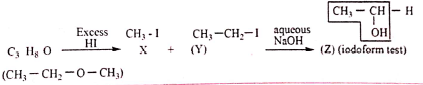
5.
(d)
ethan -1, 2-diol
6.
(c)
methanol
7.

8.
(a)
4 – chloro – 2,3 – dimethyl pentan – 1-ol
9.
(CH3)2C = C (CH3)2
10.
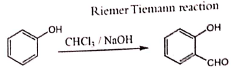
trichloro methane
11.
(a)
Phenol
12.
According to Saytzeff rule.
13.
(c)
14.
15.
Hydroboration - Anti Markownikoff product
CH3 – CH2 –CH2 – CH2 – CH2 – OH
16.
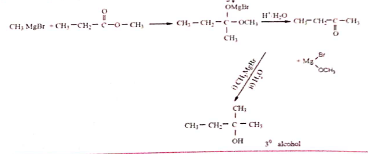
17.
CH3 CH (OH) CH2CH3
2R-OH+ 2Na ⟶ 2RONa + H2 ↑
2 moles of alcohol gives 1 mole of H2 which occupies 22.4 L at 273 K and 1 atm number of moles of alcohol
= 2 moles of R -OH/22.4L of H2 x 560 ml
= 0.05 moles
No of moles = mass/molar mass = m/M
= 3.7/0.05 = 74 g mol-1
General formula for (R-OH) Cn H2n + 1OH
n(12) + (2n + 1) (1) + 16 + 1 = 74
14n = 74 - 18
14n = 56
n = 56/14 = 4
The "2" alcohol which contains 4 carbon is CH3 - CH (OH) CH2 - CH3
18.
\(K_h= { \frac { { K }_{ w } }{ K_b } } = \frac{1 \times 10^{-14}}{1.8 \times 10^{-5}}\)
= 0.55 x 10-9 = 5.5 x 10⁻¹⁰
19.
(c)
\(h=\sqrt { \frac { { K }_{ w } }{ { K }_{ a }.{ K }_{ b } } } \)
20.
HPO42− can have the ability to accept a proton to form H2PO4-
It can also have the ability to donate a proton to form PO4-3
21.
H3PO4 + H - OH ⇌ H3O+ + H2PO4-
acid 1 base 1 acid 2 base 2
\(\therefore\) H2PO4- the conjugate base of H3PO4
22.
Ka = 1 × 10⁻³
pH = 4
[Acid]/[Salt] = ?
pH = pKa + log [Acid]/[Salt]
4 = -log10 (1 x 10⁻³) + log [Acid]/[Salt]
4 = 3 + log [Acid]/[Salt]
1 = log10 [Acid]/[Salt]
[Acid]/[Salt] = 101
i.e., [Acid]/[Salt] = 1/10
1 : 10
23.
x ml of 0.1 M NaOH + x mL of 0.01 M HCI
No. of moles of NaOH = 0.1 x X x 10-3
= 0.1 X x 10-3
No. of moles of HCI = 0.01 x X x 10-3
= 0.01 X x 10-3
No. of moles of NaOH after mixing
= 0.1 X x 10-3 - 0.01 X x 10-3
= 0.09 X x 10-3
Concentration of NaOH\(= (\frac{0.09x \times 10^{-3}}{2x \times 10^{-3}}) = 0 .045\)
[OH-] = 0.045
pOH =-log (4.5 x 10⁻²)
= 2 -log 4.5
= 2 - 0.65 = 1.35
pH = 14 - 1.35 = 12.65
24.
AgCl(s) ⇌ Ag+(aq) + Cl-(aq)
NaCl → Na+ +Cl-
0.1M 0.1M 0.1M
Ksp = 1.6 × 10⁻¹⁰
Ksp = [Ag+][ Cl-]
Ksp = (s) (s + 0.1)
0.1 >>> s
∴ s + 0.1 = 0.1
∴ s = 1.6 × 10⁻¹⁰/ 0.1 = 1.6 × 10⁻⁹
25.
C5H5N + H-OH ⇌ C5H5 +NH + OH-
\(\frac { { \alpha }^{ 2 }{ C } }{ 1-\alpha } =K_b\)
\(\alpha\)2C \(\approx\) Kb
\(\alpha = \sqrt {\frac{K_b} C} = \sqrt {\frac{1.7 \times 10^{-9}} {0.1}}\)
\(= \sqrt{1.7} \times 10^{-4}\)
Percentage of dissociation =\(= \sqrt{1.7} \times 10^{-4}\) x 100
= 1.3 x 10-2 = 0.013%
26.
BF3 → electron deficient → Lewis acid
PF3 → electron rich → Lewis base
CO → having lone pair of electron → Lewis base
F → unshared pair of electron → Lewis base
27.
BF3 → electron deficient → Lewis acid
PF3 → electron rich → Lewis base
CF4 → neutral → neither Lewis acid nor base
SiF4 → neutral → neither Lewis acid nor base
28.
H2O + H2O ⇌ H3O+ + OH-
acid 1 base 1 acid 2 base 2
HF + H2O ⇌ H3O+ + F-
acid 1 base 1 acid 2 base 2
∴ Conjugate bases are OH- and F- respectively.
29.
Ca(OH)2 ⇌ Ca2+ + 2OH-
Given that pH = 9
pOH = 14 - 9 = 5
[pOH = - log10 [OH]]
[OH-] = 10 [pOH]
[OH] = 10-5 M
Ksp = [Ca2+] [OH-]
= 10-5/2 x (10-5)2 = 0.5 x 10⁻¹⁵
30.
\(\mathrm{Ag}_{2} \mathrm{C_2O_4} \rightleftharpoons 2 \mathrm{Ag}_{}^{+}+\mathrm{C_2O}_{4{}}^{2-}\)
\(\left[\mathrm{Ag}^{+}\right]=2 .24 \) ×10-4mol L-1
\(\mathrm{C_2O}_{4{}}^{2-} = \frac {2.24 \times 10 ^{-4}}{2}\) mol L-1
= 1.12 ×10⁻⁴mol L-1
Ksp = [Ag]2 [C2O42-]
= (2.24 ×10⁻⁴mol L-1) (1.12 ×10⁻⁴mol L-1)
= 5.619 × 10⁻¹²mol3L-3
31.
[Fe(H2N-CH2-CH2-NH2)3]3(PO4)2
[Fe(en)3]2+(\(PO_{4}^{3-}\))
32.
a) Fe2+ b) Fe3+ c) Fe0
33.
(a) coordination isomers
(b) no isomerism ( different molecular formula)
(c)⬅NCS; ⬅SCN coordinating atom differs : linkage isomers
34.
Three isomers. If we consider any one of the ligands as reference (say Py), the arrangement of other three ligands (NH3, Br- and Cl-) with respect to (Py) gives three geometrical isomers.
35.
In all the complexes, the central metal ion is Co3+, among the given ligands CN- is the strongest ligand, which causes large crystal
field splitting i.e maximum Δ0
36.
The electronic configuration t2g3, e2g
[ 3 x (-0.4)+ 2(0.6)]Δ0
[-1.2 + 1.2] Δ0 = 0
37.
(d)
38.
(d)
chloridobis(ethane-1, 2-diamine)nitrito K-O Cobalt(III) chloride
39.
The complex is [M(H2O)5Cl]Cl2
1000 ml of 1 M solution of the complex gives 2 moles of Cl- ions 1000 ml of 0.01 M solution of the complex will give
\(\frac{100 ml \times 0.01M \times 2Cl^-}{1000 ml \times 1M}\)
= 0.002 moles of Cl- ions
40.
In the complex [M(en)2(Ox)]Cl For the central metal ion M3+
The primary valence is = +3
The secondary valence = 6
sum of primary valence and secondary valence = 3 + 6 = 9
41.
(a)
Al < Ga < In < Tl
42.
(a)
Metal borides
43.
(a)
| A | B | C | D |
| 2 | 1 | 4 | 3 |
44.
(d)
Feldspar is not aluminosilicate
45.
(a)
Tetrahedral
46.
(d)
dry ice
47.
(a)
+4
48.
(c)
Lead
49.
(b)
B3H6
50.
(d)

12th Standard Syllabus & Materials
12th Standard
TN 12th Computer Applications களப்பெயர் முறைமை (DNS) Sample Question Papers Study Material - QB365 Set A
NEW12th Standard
TN 12th Computer Applications வலையமைப்பு எடுத்துக்காட்டுகள் மற்றும் நெறிமுறைகள் Sample Question Papers Study Material - QB365 Set A
NEW12th Standard
TN 12th Computer Applications கணினி வலையமைப்பு ஓர் அறிமுகம் Sample Question Papers Study Material - QB365 Set A
NEW12th Standard
TN 12th Computer Applications PHP-உடன் MySQL-ஐ இணைத்தல் Sample Question Papers Study Material - QB365 Set A



Tamilnadu Stateboard 12th Standard Subjects

Maths
Chemistry

Physics

Biology

Computer Science

Business Maths and Statistics

Economics

Commerce

Accountancy

History

Computer Applications
Biology
Computer Technology
Computer Applications
Computer Science
Business Maths and Statistics
Commerce
Economics
Maths
Chemistry
Physics
Computer Technology
History
Accountancy

Tamil

English

French
Tamilnadu Stateboard Standards


